
Your Cart is Empty






I still remember the thrill of finding that $15 dress at a fast fashion store when I was younger. The price felt like a victory. The fabric looked sleek and polished on the hanger, and I convinced myself it looked expensive.
Then I wore it once.
After a few washes, the seams puckered. The fabric wrinkled badly. Worse, the synthetic material felt scratchy against my skin. Within a month, it sat crumpled at the back of my closet, unworn and unwearable. That $15 "deal" cost me more in disappointment than if I'd invested in something real from the start.
As I've gotten older, my relationship with clothing has completely transformed. I now seek out pieces made from natural fibers like silk, linen, and wool. I'm willing to spend more on a well-made blazer or jeans that will look just as good five years from now as they do today. Because here's what I've learned: quality isn't expensive. It's an investment. And cheap always costs more in the end.
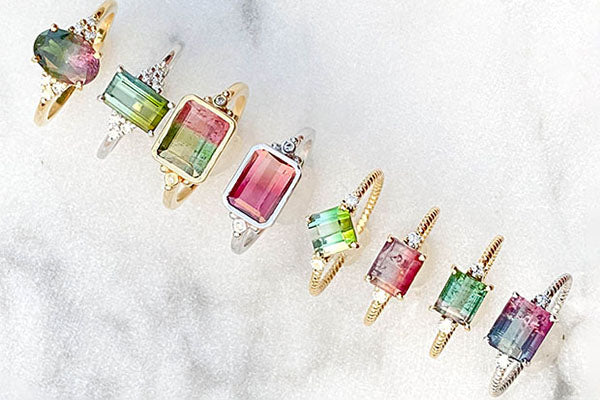
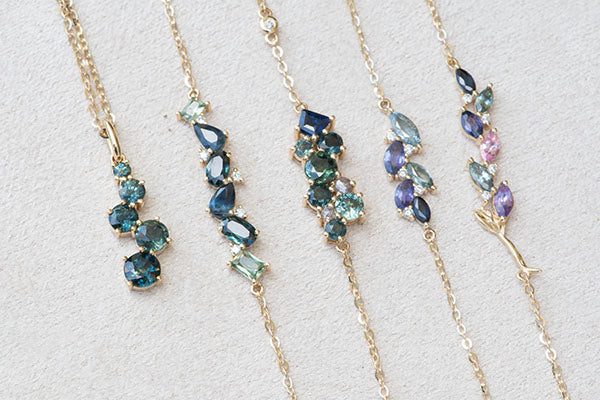
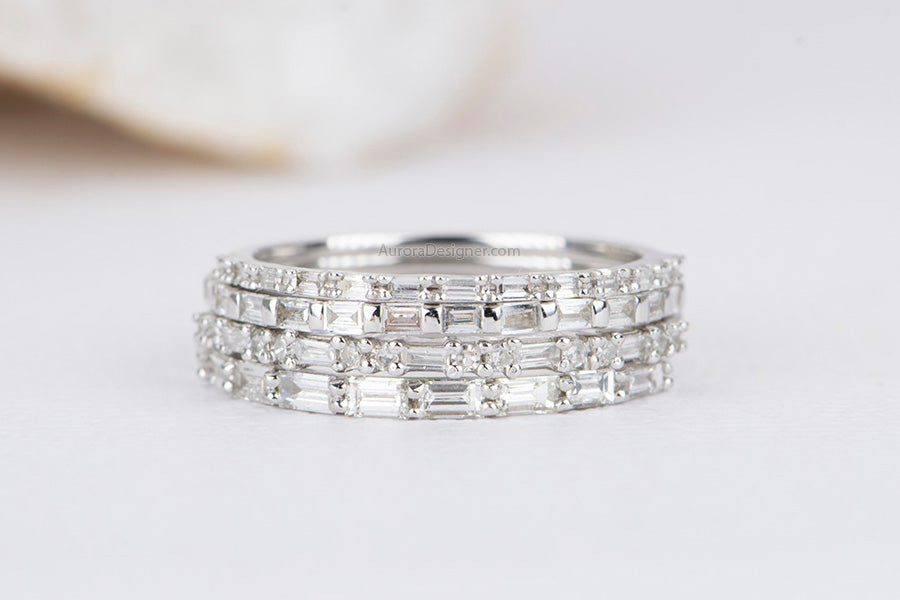
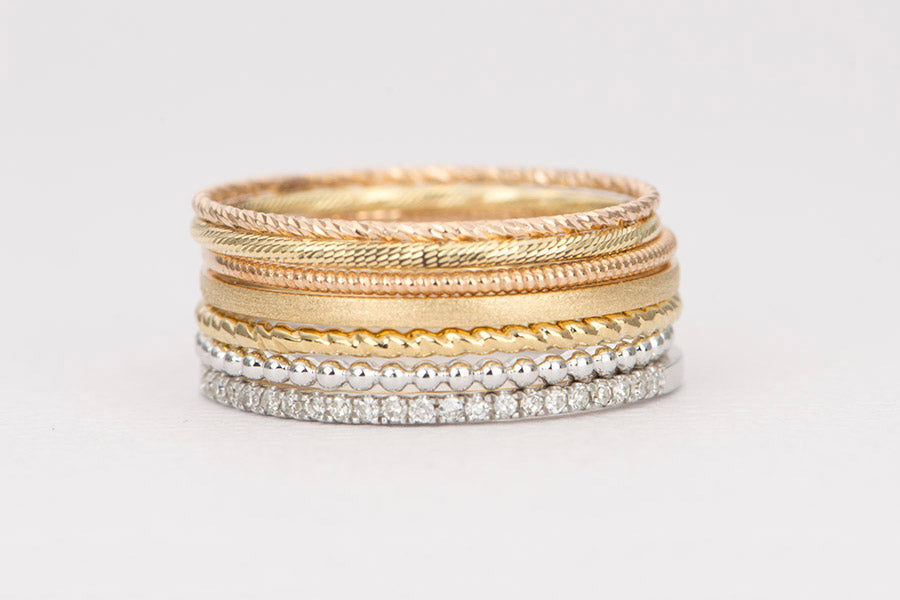
This exact philosophy is why Aurora Designer will never make gold-plated jewelry.
The Uncomfortable Truth About Gold Plating
Gold plating is the fast fashion of the jewelry world. It promises the look of luxury at a fraction of the cost, but just like that $15 dress, it can't deliver on its promise.
Gold plating involves coating a base metal (usually brass, copper, or nickel) with an ultra-thin layer of gold, often just 0.5 to 2.5 microns. To put that in perspective, a human hair is about 75 microns thick. The gold layer on plated jewelry is thinner than 1/50th of a single strand of your hair.
That thin layer might look beautiful in the store, but it's fighting a losing battle from the moment you put it on.
What Actually Happens When You Wear Gold-Plated Jewelry
Your skin is slightly acidic. Your natural oils, sweat, lotions, and perfumes are chemically active. When gold plating comes into contact with these elements, it begins to break down.
At first, you might not notice. But after a few weeks of regular wear, the gold layer starts to wear away at friction points: the back of a ring, the clasp of a necklace, the inside of a bracelet.
What's underneath that gold? Base metal. Often brass or copper, which oxidize when exposed to air and moisture. This is when you start seeing green or black marks on your skin. This is when the jewelry starts to look dull, tarnished, or discolored in patches.
Some people experience allergic reactions to the base metals. The irony is cruel: you bought gold-plated jewelry because you wanted something beautiful, and instead you're dealing with skin irritation and a piece that looks worse every time you wear it.
The Math Doesn't Add Up
A gold-plated ring might cost $40. It looks gorgeous for three months. Then it starts to tarnish. By month six, you're embarrassed to wear it. You could get it re-plated for $30 to $50, repeating this process every year or two.
Over five years, you've spent $40 initially, plus $150 to $250 in re-plating costs. That's $190 to $290 for a piece that never quite looks as good as it did on day one.
Now consider a solid 14k gold ring. Yes, it costs more upfront, perhaps $500 to $800. But that ring will look virtually identical in five years or ten years. It won't tarnish. It won't turn your finger green. It won't need re-plating.
You can also always resell a solid 14K gold ring. As gold prices rose over the years, what you spend today may be worth more in 5 to 10 years.
The solid gold ring costs less per year of wear. It holds its intrinsic value. And most importantly, it delivers on the promise of beauty and quality every single day.
Why I Choose Solid Gold, Every Time
When I started Aurora Designer in 2015, I made a conscious decision: I would only work with solid precious metals.
This wasn't an easy choice. Gold plating would have allowed me to offer lower price points and compete with the flood of "affordable luxury" brands saturating the market. But I kept thinking about that $15 dress. About the disappointment. About the waste.
I didn't want to create jewelry that would disappoint someone six months after they bought it. I didn't want customers to feel betrayed when their "gold" ring started looking brassy and cheap. I didn't want to contribute to the cycle of buying, discarding, and replacing that defines fast fashion and, increasingly, fast jewelry.
Instead, I wanted to create pieces that would become part of someone's story. Jewelry they could wear every day without worry. Pieces they could pass down to their children, carrying memories and meaning across generations.
That's only possible with solid gold.
The Real Luxury: Pieces That Last
Solid 14k or 18k gold isn't just about status or showing off. It's about chemistry and longevity.
Gold is remarkably stable. It doesn't oxidize or corrode under normal conditions. The 14k gold I use at Aurora Designer is 58.3% pure gold, alloyed with other metals for strength and durability. This means your ring, necklace, or bracelet will maintain its color and luster for your entire lifetime and beyond.
This is the same principle as choosing a linen shirt over polyester, or leather shoes over synthetic. Natural materials, properly crafted, simply perform better over time. They age gracefully. They feel better. They last.
The Environmental and Ethical Dimension
There's another reason I avoid gold plating: waste.
Gold-plated jewelry has a short lifespan. When it tarnishes beyond repair, most people throw it away. It can't be easily recycled because separating the thin gold layer from the base metal is neither economically viable nor environmentally efficient.
Solid gold, on the other hand, is infinitely recyclable. When a piece is no longer wanted, the gold retains its full value and can be melted down and reformed into something new. Nothing is lost. The same gold that might have been in a Victorian-era ring could be in your modern band today.
This circular approach to materials aligns with how I think about quality and longevity. Just as I've learned to buy fewer, better-made clothes that I'll wear for years, I want to create jewelry that doesn't contribute to a disposable culture.
What This Means for You
I understand that solid gold jewelry requires a bigger initial investment. Not everyone can afford to spend $500 on a ring when a $40 plated version exists.
But if you're reading this, you're probably at the same place I was when I stopped buying fast fashion. You're tired of disappointment. You're ready to invest in pieces that deliver on their promises. You understand that true affordability isn't about the lowest price tag, it's about cost per wear, longevity, and satisfaction.
The Promise We Make
When you purchase from Aurora Designer, you are buying something you can wear without worry, without maintenance, without regret. You're buying the opposite of fast fashion.
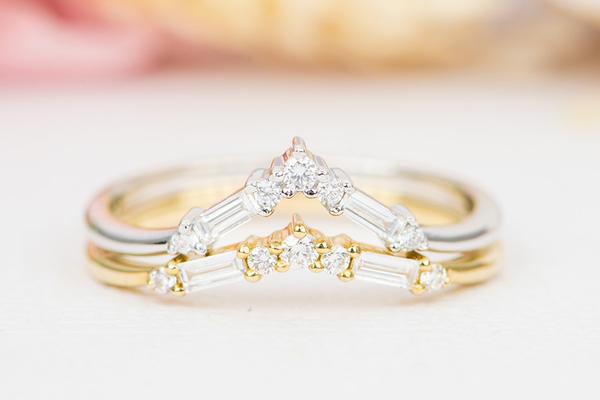
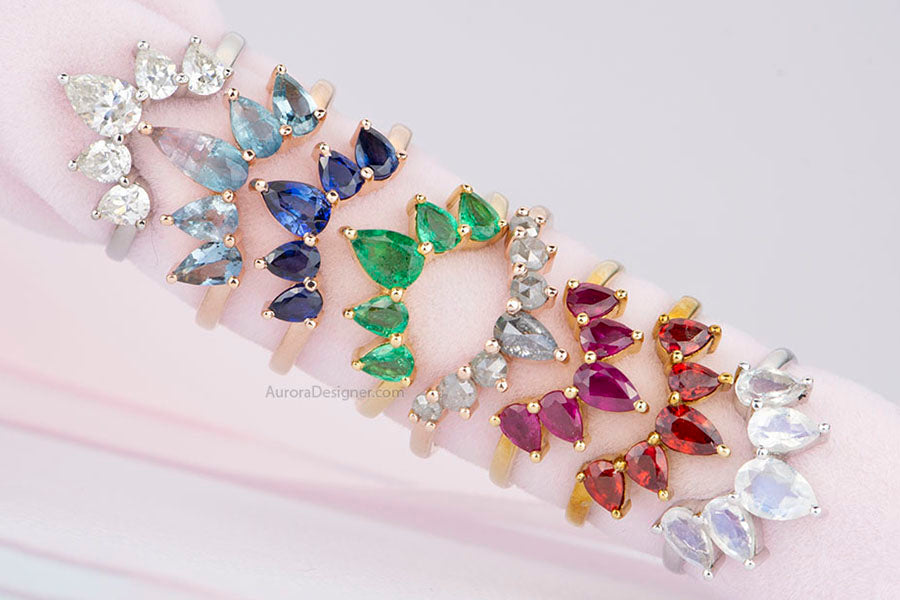
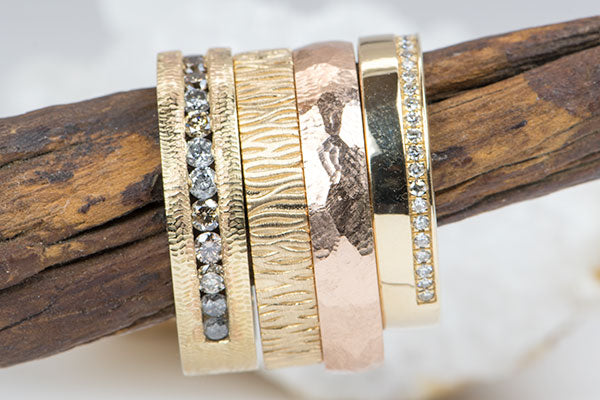
Every piece that leaves Aurora Designer is made from solid gold or platinum. No plating. No shortcuts. No compromises.
Because just like that perfectly tailored linen blazer or those soft leather boots, real gold jewelry isn't an expense. It's an investment in beauty that endures.
And that's a promise gold plating simply cannot keep.

What if true luxury isn't about a logo - but about meaning, craftsmanship, and individuality? As more women turn away from mass-produced jewelry, independent designers like us are redefining what fine jewelry looks and feels like. Here's why the shift is happening - and why it matters.

Looking for an engagement ring that feels more you and less expected? Montana sapphires are having a moment - with dreamy, one-of-a-kind colors that stand out from the classic deep blue. Whether you're drawn to timeless elegance or something a little more unexpected, here's what to know before you choose your forever stone.


